
Embark on a journey to learn the art of repairing large cracks in a concrete patio. Discover the essential tools, methods, and techniques that will help you restore your patio to its former glory.
Unveil the secrets to successful crack repair and ensure your patio remains strong and resilient against the test of time.
Preparation for Repair
To effectively repair large cracks in a concrete patio, you will need the following tools and materials:
Tools
Chisel
Wire brush
Hammer
Vacuum or air compressor
Caulking gun
Trowel
Concrete mix
Concrete sealer
Materials
Concrete crack filler or epoxy
Bonding adhesive
Safety gloves and goggles
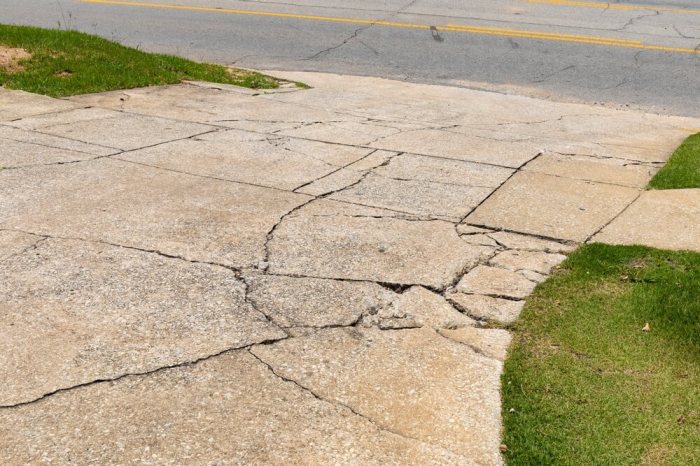
It is crucial to clean the crack thoroughly before starting the repair process. This ensures that the filler or epoxy adheres properly to the concrete surface, preventing any future issues or deterioration.To properly assess the depth and width of the crack, use a chisel and wire brush to remove any loose debris and dirt.
Then, measure the depth and width of the crack with a ruler or tape measure. This will help determine the appropriate repair method and amount of filler or epoxy needed for the job.
Assessing Crack Depth and Width
When assessing the crack, ensure it is clean and free of any loose material. Use a chisel and wire brush to remove debris before measuring the crack's depth and width. This will help determine the suitable repair method and materials needed.
Repair Methods
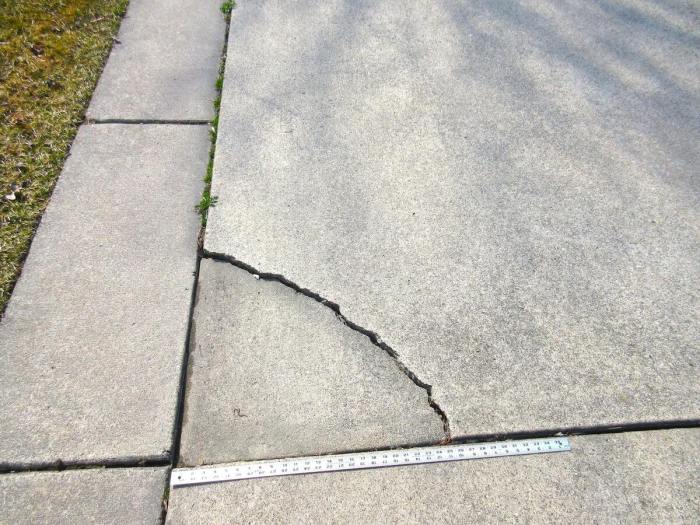
When it comes to repairing large cracks in a concrete patio, two common methods are epoxy injections and polymer-based caulking compounds. Each method has its own advantages and is suitable for different situations.
Epoxy Injections
Epoxy injections are a popular choice for repairing large cracks in concrete because they are durable and can provide a strong bond. Here is a step-by-step guide on how to apply epoxy injections:
- Clean the crack: Begin by cleaning the crack with a wire brush and remove any debris or loose concrete.
- Prepare the epoxy: Mix the epoxy according to the manufacturer's instructions. Make sure to wear gloves and protective eyewear.
- Inject the epoxy: Using a caulking gun, carefully inject the epoxy into the crack, filling it completely.
- Smooth the surface: Use a putty knife to smooth out the epoxy and ensure it is level with the rest of the patio surface.
- Allow to cure: Let the epoxy cure for the recommended time before walking or placing any heavy objects on the repaired area.
Polymer-Based Caulking Compounds
Polymer-based caulking compounds are another option for repairing and filling cracks in concrete surfaces. Here is the process of using polymer-based caulking compounds:
- Clean the crack: Similar to epoxy injections, start by cleaning the crack with a wire brush to remove any debris.
- Prepare the compound: Cut the tip of the caulking tube and load it into a caulking gun for easy application.
- Apply the compound: Slowly squeeze the caulking gun to fill the crack with the polymer-based compound, ensuring it reaches the bottom.
- Smooth the surface: Use a putty knife or trowel to smooth out the compound and make it level with the rest of the concrete surface.
- Allow to dry: Let the caulking compound dry according to the manufacturer's instructions before using the patio.
Reinforcement Techniques
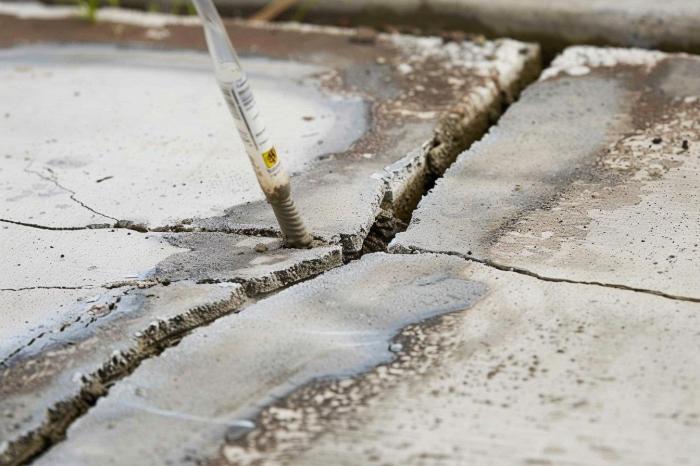
When repairing large cracks in concrete patios, using reinforcement techniques such as rebar or mesh can provide significant benefits in terms of structural integrity and preventing future damage. These materials help distribute the load more evenly across the repaired area, reducing the risk of the crack reappearing or expanding over time.
Proper Insertion of Rebar or Mesh
To properly reinforce the repaired crack, begin by cleaning out the crack and ensuring it is free of debris. Next, insert the rebar or mesh into the crack, making sure it is centered and secured in place. For rebar, consider drilling holes on either side of the crack to anchor the material firmly.
Mesh can be laid flat over the crack before applying the repair material. This step is crucial in ensuring the reinforcement effectively strengthens the repair.
Importance of Drying and Curing Time
Allowing the reinforcement materials to dry and cure properly is essential for the repair to reach its maximum strength. Follow the manufacturer's guidelines for the specific materials used, as drying and curing times can vary. Avoid putting excessive weight or stress on the repaired area until the reinforcement has fully set and hardened.
This patience in allowing proper drying and curing time will ultimately contribute to the long-term durability of the repair.
Finishing Touches
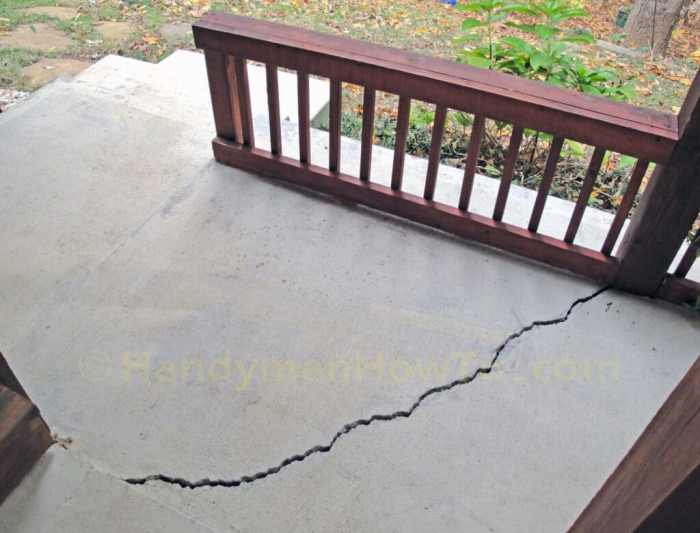
In the final stages of repairing large cracks in your concrete patio, it is crucial to focus on the finishing touches to ensure a seamless and durable result. This involves smoothing out the repaired crack, applying a sealant or waterproofing agent, and matching the color and texture of the repair with the existing concrete patio.
Smoothing Out the Repaired Crack
After the repair material has set, use a trowel or putty knife to gently smooth out the surface of the repaired crack. Make sure to blend the edges of the repair with the surrounding patio surface to create a seamless finish.
Applying Sealant or Waterproofing Agent
To protect the repaired area from moisture and further damage, it is essential to apply a sealant or waterproofing agent. This will help prevent water penetration and prolong the life of the repair. Follow the manufacturer's instructions for the specific product you choose.
Matching Color and Texture
To achieve a cohesive look, try to match the color and texture of the repair with the existing concrete patio. You can use concrete dyes or stains to adjust the color, and textured rollers or stamps to mimic the texture of the surrounding surface.
Take your time to blend the repair seamlessly for a professional finish.
Ending Remarks
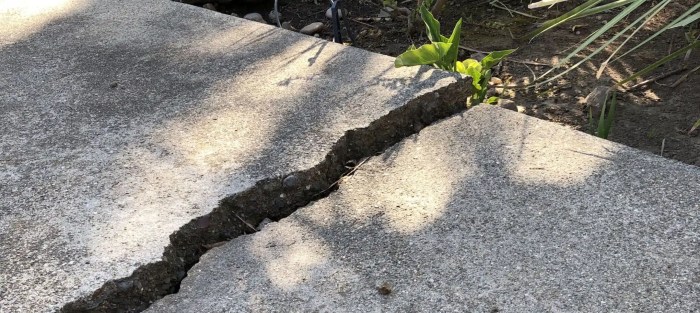
As we conclude our discussion on repairing large cracks in concrete patio, remember that with the right tools and know-how, you can revitalize your outdoor space with confidence and skill.
Questions and Answers
What tools and materials are needed for repairing large cracks in a concrete patio?
Some necessary tools include a chisel, hammer, wire brush, and materials like epoxy or polymer-based caulking compounds.
Why is it important to clean the crack before starting the repair process?
Cleaning the crack ensures better adhesion of the repair material and improves the overall quality and longevity of the repair.
How do I properly assess the depth and width of the crack for repair?
Use a measuring tool to determine the dimensions of the crack, which will help you choose the most suitable repair method.
What are the benefits of using reinforcement techniques like rebar or mesh?
Reinforcement techniques enhance the strength of the repair, prevent future damage, and ensure longevity of the repaired area.
How can I match the color and texture of the repair with the existing concrete patio?
You can achieve a cohesive look by using tinted sealants or mixing pigments with the repair material to closely match the existing surface.